Get $10 Voucher per $100 Spend! T&C Apply

Free Shipping on Orders Over $150. T&C Apply

Enjoy 60 Days of Easy, Hassle-Free Returns! T&C Apply

The case for natural fibers, and the hidden cost of synthetic ones.

Most people spend a lot of time thinking about what goes into their body. Far fewer think about what sits directly against it, all day, every day. Your underwear is the garment in closest and most sustained contact with some of your most sensitive skin, and if it's made from synthetic fabric, there's growing scientific evidence that this matters a great deal.

Here's what the research says, and why making the switch to natural fibers like merino wool is one of the most straightforward things you can do for your long-term health and comfort.

The Problem With Synthetic Underwear

Polyester, nylon, and other synthetic fabrics are everywhere in the underwear market. They're cheap to produce, they're durable, and brands market them as moisture-wicking. But there are significant downsides that rarely make it onto the hangtag.

Microplastics: A Slow-Burn Health Risk

Synthetic fabrics are, at their core, plastic. Polyester is made from polyethylene terephthalate (PET), the same petroleum-derived material used in plastic bottles. When you wear it against your skin, and especially when you wash it, it sheds.

Research by Napper and Thompson (2016) found that a single wash of a synthetic garment releases up to 496,030 microfibers into wastewater. Those particles enter waterways, the food chain, and ultimately, us. Humans are now estimated to ingest between 39,000 and 52,000 microplastic particles per year through food and water alone, and that figure rises further when inhalation is factored in.

But it's not just what we ingest. Synthetic underwear sheds microfibers directly against skin, and body heat and friction accelerate that process. A 2022 study published in Environment International (Jenner et al.) confirmed that microplastic particles can circulate within the human body and potentially cross biological barriers. They have now been detected in human blood, semen, and placental tissue.

Relevant studies:


Hormone Disruption and Reproductive Health

The chemicals carried by synthetic microplastics, particularly bisphenols and phthalates, are classified as endocrine disruptors. These are compounds that interfere with the body's hormone signalling.

Research published in the American Journal of Physiology (Martinez-Ibarra et al., 2023) found that bisphenols and phthalates can damage insulin-producing pancreatic cells and disrupt metabolic function. Separate research published in Environmental Health Perspectives found that men with higher phthalate levels had lower testosterone and reduced fertility markers.

For men in particular, synthetic underwear poses an additional physical problem: synthetic fabrics trap heat and moisture, raising the temperature of the testes. Because healthy sperm production requires an environment 3–4°C cooler than core body temperature, even a modest temperature increase can meaningfully affect sperm count and motility. A 2024 study published in the Journal of Toxicological Sciences detected microplastics in 100% of human testicular tissue samples tested, linking this accumulation to oxidative stress and sperm DNA damage.

The picture for women is equally concerning. A 2025 systematic review published in Archives of Gynecology and Obstetrics (Özen Inam) analyzed 15 studies and concluded that microplastic exposure significantly disrupts ovarian function, decreases fertility rates, and throws hormone levels out of balance. In a landmark finding that same year, researchers detected microplastic particles in the ovarian follicular fluid of 14 out of 18 women undergoing IVF treatment. Plastic is now being found in the fluid that directly surrounds and nourishes developing eggs. The study authors noted that these disruptions could contribute to a range of reproductive conditions including abnormal menstrual cycles, endometriosis, fibroids, and increased miscarriage risk. There is also growing concern about links to PCOS, which affects up to 13% of women of reproductive age worldwide. Synthetic clothing is not the only source of this exposure, but it represents a direct, skin-level contact point that is straightforward to reduce.

Relevant studies:

Skin Irritation and Bacterial Growth

Synthetic fabrics don't breathe. They trap heat and moisture against the skin, creating warm, damp conditions that are ideal for bacterial and yeast overgrowth. This is particularly relevant in the underwear zone, where skin-on-fabric contact is constant and ventilation is limited. The result can be recurring irritation, chafing, rashes, and infections. These problems are far less common with natural fiber alternatives.

The Environmental Cost of Synthetic Fabric

The health effects of microplastics are one side of the story. The environmental damage is the other, and the scale of it is significant.

Synthetic textiles are estimated to be responsible for 35% of all microplastic pollution in the world's oceans, making clothing one of the largest contributors to this problem globally. To put the numbers in context: as of 2024, scientists estimate there are 51 trillion microplastic particles in the oceans. A meaningful portion of those came out of a washing machine.

A single laundry load of polyester garments can release up to 700,000 microplastic fibers, many of which pass straight through wastewater treatment systems and into waterways. Marine organisms, from plankton to fish to seabirds, ingest these particles, which move up the food chain, disrupting reproduction and transferring toxins. Microplastics have been detected in the placentas of marine mammals, in deep ocean sediment, and in remote freshwater systems far from any urban center.

Beyond washing, synthetic fabrics shed microfibers throughout their entire lifecycle: during manufacturing, during wear, and when discarded in landfill. And producing polyester in the first place requires significant fossil fuel input: in 2022, an estimated 70 million barrels of oil were used to manufacture polyester globally.

Merino wool sits at the other end of this spectrum. It's a renewable resource that grows back year after year. It requires no petroleum to produce. It biodegrades at end of life. And because high-quality merino garments last significantly longer than synthetic alternatives, you're buying and discarding less overall. Brands like Icebreaker and Mons Royale also work to responsible sourcing standards. Icebreaker's ZQ certification covers land stewardship and environmental practices alongside animal welfare.

Choosing what you wear is one of the more tangible ways an individual can reduce their contribution to microplastic pollution. Underwear is a good place to start: it's washed frequently, worn close to the body, and easy to replace with a better alternative.

Further reading:


Why Merino Wool Is Different

Merino wool, particularly the fine superfine grades used by brands like Icebreaker and Mons Royale, has a fundamentally different relationship with your body than synthetics do.

To keep your merino performing at its best, proper care matters. Read our guide on how to wash and care for merino wool clothing.

It Regulates Temperature, Rather Than Fighting It

Merino wool is thermoregulating by nature. The fiber structure absorbs and releases moisture vapor in response to your body's changing temperature, buffering the microclimate between the fabric and your skin. This means it keeps you warmer when you're cold and cooler when you're warm, a dynamic that no synthetic fabric can replicate.

Research from Australian Wool Innovation confirms that 100% merino fabrics outperform both synthetic and natural textiles in supporting thermal comfort across activity and rest phases. This isn't just relevant for outdoor activity. It matters for everyday wear, during sleep, and in the fluctuating temperatures of New Zealand's variable climate.

It's Genuinely Moisture-Wicking (Not Just Marketing)

Unlike synthetics, which push moisture off the surface while remaining non-absorbent, merino can absorb up to 35% of its own weight in moisture vapor before it even feels damp. Moisture is pulled away from the skin and moves through the fabric, where it evaporates. This keeps you drier and more comfortable, and critically, it doesn't create the warm, humid environment that synthetic fabrics do.

It Has Natural Antimicrobial Properties

Merino wool naturally resists odor-causing bacteria. The lanolin in the fiber inhibits bacterial growth, which means merino garments stay fresher for longer between washes, a genuine functional advantage, not just a talking point. This is one reason merino underwear and base layers are popular with travelers and anyone doing multi-day activity.

It's Kind to Sensitive Skin

Clinical research has shown that patients with chronic atopic dermatitis (eczema) experienced measurable reductions in dryness, redness, and itching when wearing superfine merino wool next to the skin, without any change in medication. This contrasts sharply with synthetic fabrics, which commonly exacerbate skin sensitivity.

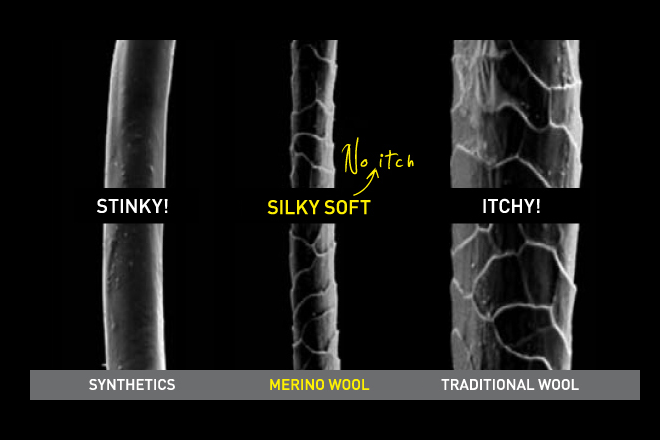
The reason comes down to fiber diameter. Superfine merino fibers, the grade used in quality underwear, are thin enough to bend against the skin rather than prickle it. The result is a softness comparable to cotton, with none of the functional limitations.

Relevant research:

Why Choose Merino Wool for Travel? - Carryology

The Brands We Stock

We carry a strong range of merino underwear from two of the best in the business.

Icebreaker has built its entire identity around merino, and their underwear range reflects that commitment. Their Anatomica, Merino Essentials, and Sprite lines use ZQ-certified New Zealand merino, a supply chain standard that covers animal welfare, land management, and fiber traceability. Icebreaker underwear is designed to perform as base layer or standalone wear, with cuts that suit both active use and everyday comfort.

Mons Royale is a Wanaka-born brand with deep roots in New Zealand's outdoors culture. Their underwear and base layers use superfine merino and are designed for people who move, whether that's on the mountain, on the trail, or between both in the same day. Mons is particularly well regarded for their women's styles and their technical merino-blend options that balance stretch with natural fiber performance.

Icebreaker


Sold out


Sold out


Sold out


Sold out


Sold out


Sold out


Sold out


Sold out


Sold out


Sold out

Mons Royale


Sold out


Sold out


Sold out


Sold out


Sold out


Sold out


Sold out

Making the Switch

If you've been wearing synthetic underwear and haven't thought much about it, you're not alone. The industry has done a good job of making polyester feel like a performance upgrade. But the science tells a different story, one where the fabric closest to your skin is worth paying attention to.

Natural fiber underwear, and merino in particular, offers better temperature regulation, real moisture management, natural odor resistance, and a lower burden of potentially harmful chemicals. It costs more upfront, but lasts longer, washes better over time, and doesn't come with the microplastic baggage.

Come in-store or browse our full range of Icebreaker and Mons Royale underwear online. Your skin will notice the difference quickly. The rest of your body will thank you over the long run.

Prepare For Your Next Adventure


HIKING


RUNNING


BIKING


SKIING

Leave a comment

Please note: comments must be approved before they are published.