Ski Boot Canting and Alignment Explained: Why Your Stance Matters More Than You Think
Ski Boot Canting and Alignment Explained: Why Your Stance Matters More Than You Think
Most skiers focus on boot size, flex rating, and comfort when they think about ski boot fit. Very few think about alignment. But if your body's natural stance means your skis aren't sitting correctly on the snow, no amount of heat moulding, custom footbeds, or shell modifications will fully solve the problem. Ski boot canting and alignment correction is one of the most overlooked and most impactful parts of a professional ski boot fitting, and here's everything you need to know about ski boot alignment problems, canting explained, and why your stance matters more than you think.
What Is Ski Boot Alignment?
Ski boot alignment refers to the process of assessing and correcting the relationship between your body, your boots, and your skis. When you stand in your ski boots on a flat surface, your knees, hips, and ankles should stack naturally over the centre of your ski. If they don't, your edges won't engage efficiently, you'll work harder than you should to control your skis, and over time you'll develop unnecessary fatigue and strain in your knees, hips, and lower back.
Ski boot alignment problems are not a reflection of poor skiing technique. They are a reflection of your anatomy. Everyone's body is slightly different, and the way your legs naturally sit over your feet varies from person to person. Ski boot alignment assessment identifies these differences and corrects for them so your equipment works with your body rather than against it.
What Is Ski Boot Canting?
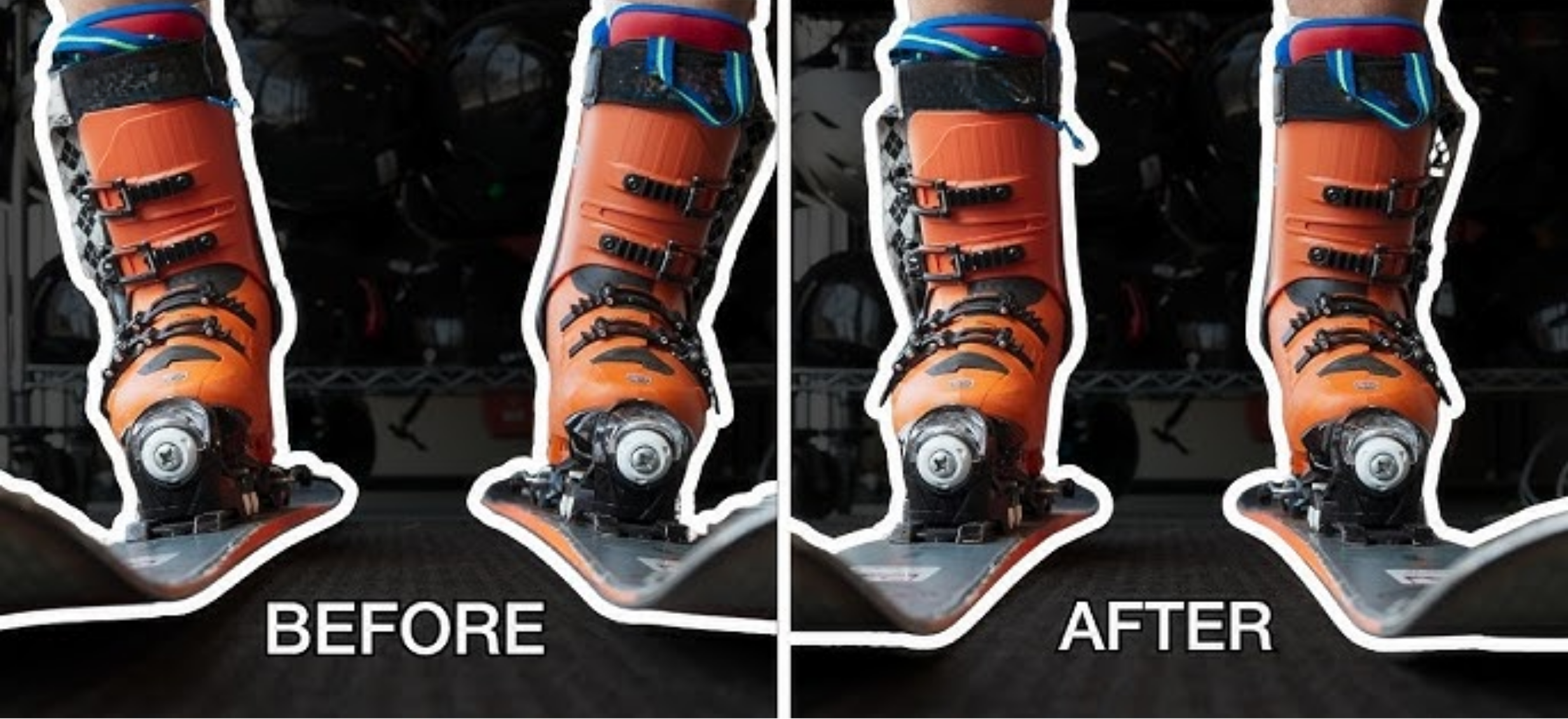
Canting is a specific type of ski stance correction that adjusts the lateral tilt of your ski boot sole. If your knees naturally fall inward or outward when you stand in a neutral position, your skis will be tilted on edge even when you're trying to ski flat. This means one edge is always engaged more than the other, making it harder to initiate turns, control speed, and ski with efficiency and balance.
Ski boot canting corrects this by adjusting the angle of the boot sole so that when you stand naturally, your skis sit flat on the snow and all four edges are equally accessible. It can be achieved in several ways depending on the boot and the degree of correction needed.
You can read a plain-English definition of canting and other common boot fitting terms in our ski boot terminology guide.
How Is Ski Boot Canting Adjusted?
Built-in Cant Adjusters — Many mid-range and performance ski boots have built-in canting adjusters on the sole or cuff of the boot. These allow a boot fitter to dial in a small degree of lateral correction without any permanent modification to the boot. Built-in adjusters are quick, reversible, and effective for mild to moderate ski boot alignment problems.
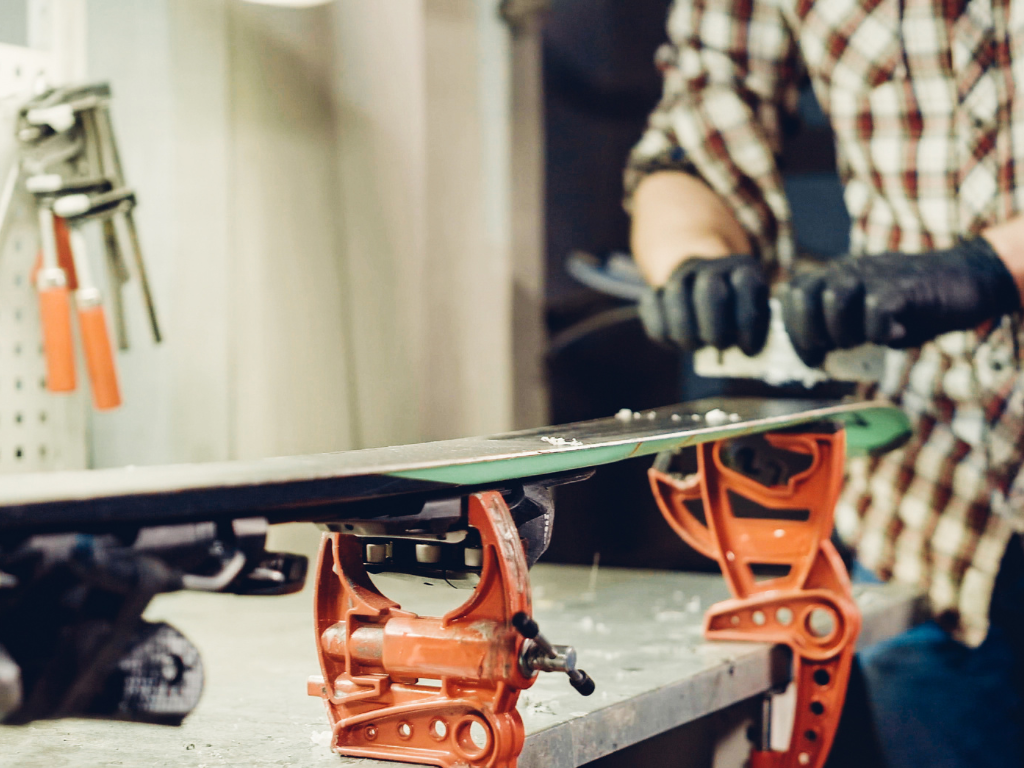
Sole Grinding — For skiers who need more ski stance correction than built-in adjusters can provide, the underside of the boot sole can be ground at a slight angle by a skilled boot fitter. This is a more permanent and precise method of ski boot canting correction and is particularly effective for skiers with significant alignment needs. Sole grinding does not affect the boot's binding compatibility as long as it is carried out within industry standards.
Cuff Alignment — Separate from sole canting, cuff alignment adjustment corrects the angle of the upper cuff of the boot relative to the lower shell. This ensures that the lower leg sits correctly inside the boot rather than being pushed inward or outward by a cuff that doesn't match the natural angle of the leg. Most modern ski boots have some degree of built-in cuff alignment adjustment, and our boot fitters assess and set this as a standard part of every fitting.
What Is the Difference Between Ski Boot Canting and Cuff Alignment?
These two ski boot alignment terms are often confused, and it's worth being clear on the distinction. Cuff alignment adjusts the upper part of the boot to match the angle of your lower leg from the knee down, ensuring your leg sits correctly inside the boot. Ski boot canting adjusts the lateral tilt of the entire boot sole to correct your overall skiing stance from the ground up, ensuring your skis sit correctly on the snow. Both address ski boot alignment problems, but at different points in the chain between your body and your skis. In some cases both adjustments are needed, and our boot fitters assess each independently during your fitting.
How Do Boot Fitters Assess Ski Boot Alignment?
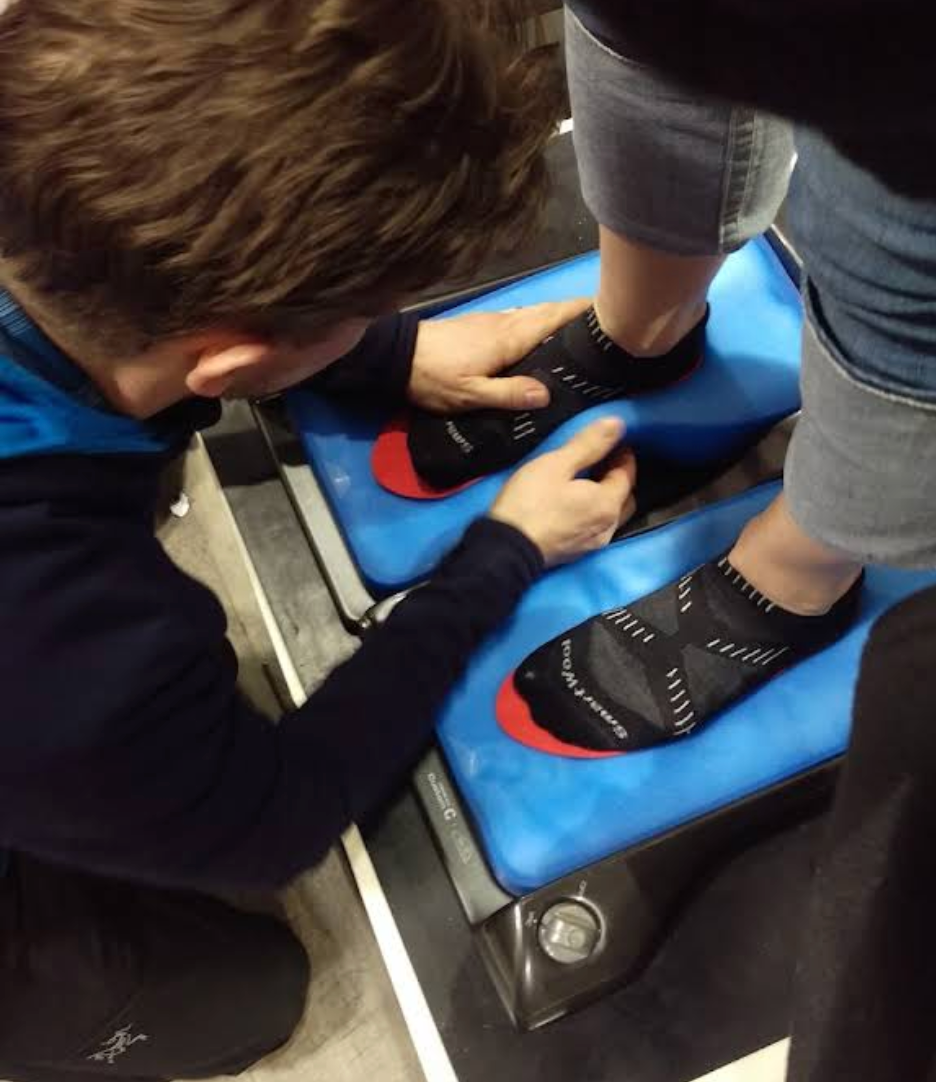
At Outside Sports, ski boot alignment assessment is a standard part of our eight-step ski boot fitting process. Our boot fitters assess your natural skiing stance by observing how your knees track over your feet when you stand in a relaxed, neutral position. We look at the angle of your lower leg inside the boot, the way your foot sits on the boot board, and how your skis would naturally sit on the snow based on your stance.
In some cases this assessment is straightforward. In others, particularly for skiers with more significant alignment differences between their left and right legs, it requires more detailed observation and measurement. Every ski boot alignment assessment is individual, and our boot fitters take the time needed to get it right.
Who Needs Ski Boot Canting Correction?
Not every skier needs canting correction, but more skiers would benefit from ski stance correction than realise. The skiers most likely to need canting adjustment include those whose knees naturally fall inward, a condition often referred to as being knock-kneed, and those whose knees fall outward, sometimes called being bow-legged. Skiers who experience persistent skiing knee pain, fatigue on one side of the body more than the other, difficulty initiating turns in one direction, or a feeling that their edges are always slightly off are all strong candidates for a ski boot alignment and canting assessment.
It's also worth noting that ski boot alignment needs can change over time. Skiers who have had knee injuries, hip replacements, or significant changes in body weight or muscle condition may find that their alignment needs have shifted and their current boots no longer suit their stance.
How Does Poor Ski Boot Alignment Affect Performance?
The effects of ski boot alignment problems go well beyond comfort. When your skiing stance is misaligned, your ability to engage your ski edges efficiently is compromised. You end up compensating through your technique, using more muscle effort to achieve the same result a well-aligned skier achieves naturally. Over a full day of skiing this compensation leads to significantly greater fatigue, and over a full season it can contribute to chronic skiing knee pain, hip pain, and lower back problems.
Conversely, skiers who have their ski boot alignment corrected through canting and cuff adjustment often describe the experience as transformative. Turns that previously felt effortful become natural. Edges that previously felt unpredictable become reliable. The mountain simply feels easier to ski, because the equipment is finally working with the body rather than against it.
Does Ski Boot Alignment Matter for Beginner Skiers?
Yes, though the effects of ski boot alignment problems are felt most acutely by intermediate and advanced skiers whose technique is developed enough to be limited by alignment issues rather than other factors. For beginner skiers, getting into the right ski boot with the correct flex and fit is the priority. But even at a beginner level, significant ski stance correction needs can make learning to ski harder than it needs to be, and it's always worth having a ski boot alignment assessment as part of a full boot fitting rather than leaving it until later.
Can Ski Boot Alignment Problems Be Fixed in Existing Boots?
In many cases, yes. If your current ski boots have built-in cant adjusters or cuff alignment adjusters, our boot fitters can assess and correct your ski boot alignment without any permanent modification. If sole grinding is needed for more significant ski stance correction, this can also be carried out on existing boots as long as the sole has sufficient material. If you've been skiing in boots that never quite felt right, or if you've developed skiing knee pain or hip pain that you suspect might be related to your stance, bring your boots in and let us take a look. You can read more about the signs your boots need attention in our guide to ski boot fit problems.
The Bottom Line on Ski Boot Canting and Alignment
Ski boot canting and alignment correction is not just for elite or racing skiers. It is a fundamental part of a complete ski boot fitting that benefits skiers at every level. Getting your ski boot alignment right means your edges work when you want them to, your body isn't compensating for a misaligned skiing stance, and every run feels more efficient, more controlled, and more enjoyable.
Skiing knee pain, edge control problems, and unexplained fatigue on the mountain are often ski boot alignment problems in disguise. Don't ignore them. At Outside Sports, ski boot alignment and canting assessment is built into every professional ski boot fitting we carry out, because we believe it's not optional. It's essential.
If you haven't had your ski boot alignment assessed, come in and see us. It might be the most important ski boot adjustment you've never had.