


When most skiers think about improving their comfort and performance on the mountain, they think about boots, skis, or bindings. Rarely do they think about socks. But if you've ever finished a ski day with cold feet, numb toes, painful pressure points, or blisters, there's a good chance your ski socks were at least partly to blame. The right ski sock is one of the smallest investments you can make in your ski kit, and one of the most impactful.
Why Your Ski Socks Matter More Than You Think
Why Ski Socks Are a Critical Part of Ski Boot Fit
Ski boots are precision equipment. A professional ski boot fitting is designed to match the exact shape and volume of your foot to the right boot shell, liner, and footbed. Every millimetre matters. When you add a thick, bulky, or poorly constructed sock into that equation, you throw off the entire fit. You create unwanted pressure points, reduce circulation, and add volume in places the boot wasn't designed to accommodate.
A technical ski sock, by contrast, is designed to work in harmony with your boot liner. It sits smoothly against the skin, wicks moisture away from the foot, and adds just enough cushioning in the right places without compromising the precision of the fit.
The Problem With Everyday Socks and Thick Wool Socks
It's a common mistake, especially among beginner skiers, to reach for the thickest, warmest socks they own before heading to the mountain. The logic seems sound. Thick socks equal warm feet. But in a ski boot, the opposite is often true.
Ski boot liners are engineered to provide insulation and warmth on their own. When you add a thick sock on top of a warm liner, you're compressing the liner's insulating materials, restricting blood flow to your feet, and creating a tighter fit than the boot was designed for. Restricted blood flow is one of the primary causes of cold feet in ski boots, which means that thick socks are often making the problem worse, not better.
Everyday cotton socks present a different problem. Cotton absorbs moisture and holds it against your skin, which causes blisters, reduces comfort, and accelerates heat loss. On a full day of skiing, your feet will sweat, and a cotton sock will leave you with damp, cold feet by lunchtime.
What Makes a Good Ski Sock
The best ski socks share a few key characteristics that set them apart from everyday hosiery and even general sports socks.
Thin profile — A good ski sock is thin enough to maintain the precision of your boot fit while still providing adequate cushioning and support. Thin ski socks allow the boot liner to do its job properly and give you better sensitivity and feedback from the snow underfoot.
Moisture-wicking materials — Technical ski socks are made from performance fibres like merino wool, nylon, and elastane. Merino wool is particularly well suited to skiing because it regulates temperature, wicks moisture away from the skin, resists odour, and provides natural cushioning without bulk. It keeps your feet warm when it's cold and helps prevent overheating on warmer ski days.
Targeted cushioning — Quality ski socks have strategically placed cushioning in high-impact zones like the shin, heel, and ball of the foot, without adding unnecessary bulk across the rest of the foot where precision fit matters most.
Seamless toe construction — Seams across the toe box are a common cause of blisters and irritation inside a ski boot. Well-made ski socks use seamless or flat-toe construction to eliminate this problem entirely.
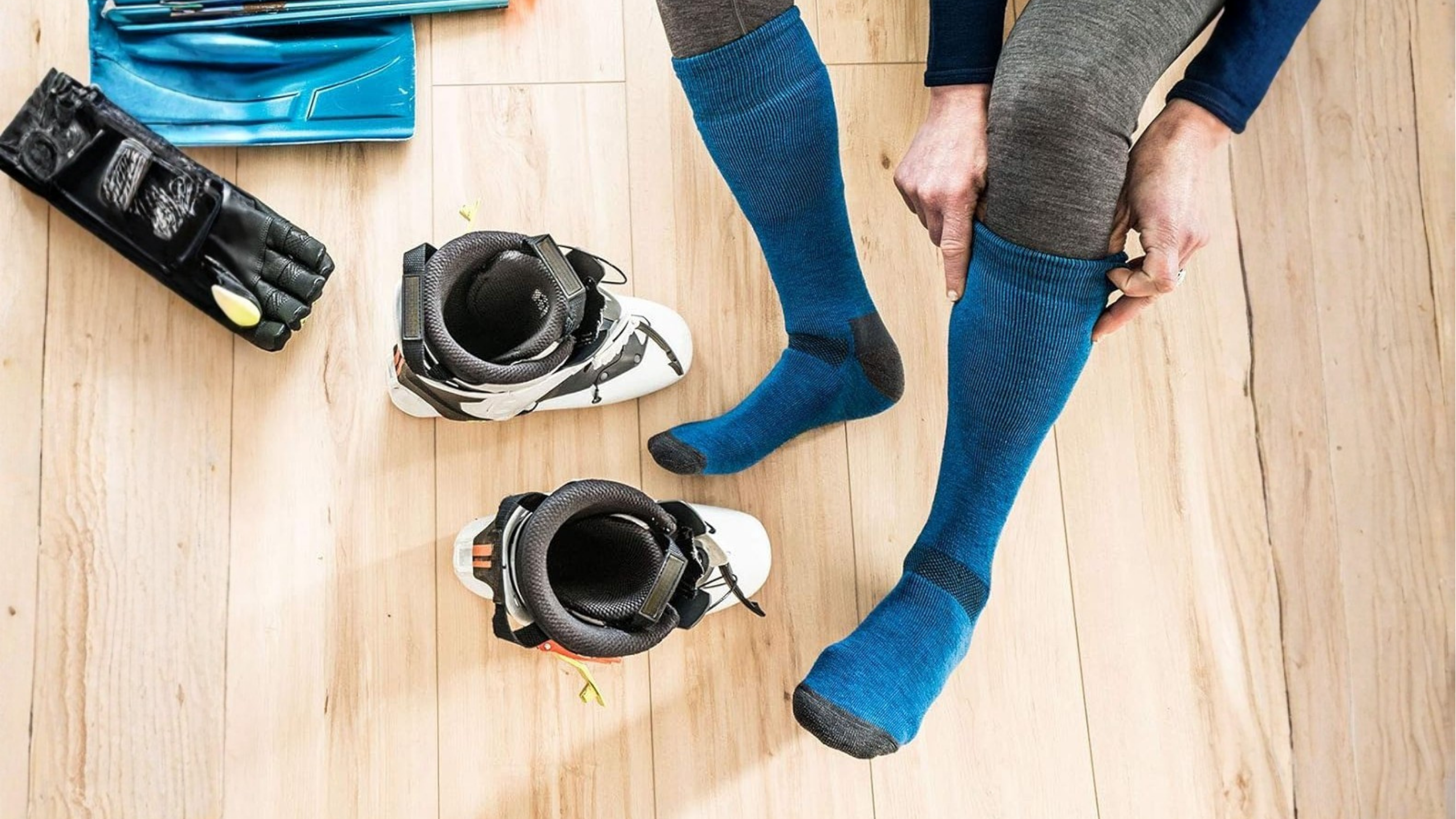
Over-the-calf length — Ski socks should reach above the calf to prevent the sock from sliding down inside the boot, which causes bunching, pressure points, and discomfort. They should stay up without cutting into the leg.
How Ski Socks Affect Ski Boot Warmth
Cold feet on the mountain are one of the most common complaints among skiers, and ski socks play a bigger role in foot warmth than most people realise. As mentioned above, thick socks restrict circulation, and good circulation is your body's primary mechanism for keeping your extremities warm. A thin, well-fitted technical ski sock allows blood to flow freely to your feet, which is far more effective at maintaining warmth than adding layers of insulation that compress the foot.
If you consistently suffer from cold feet despite wearing quality ski socks, it's worth considering whether your ski boots fit correctly. Boots that are too tight are a very common cause of cold feet, and this is something our boot fitters assess as part of every fitting. In some cases boot warmers may also be worth discussing.
How Ski Socks Affect Ski Boot Fit
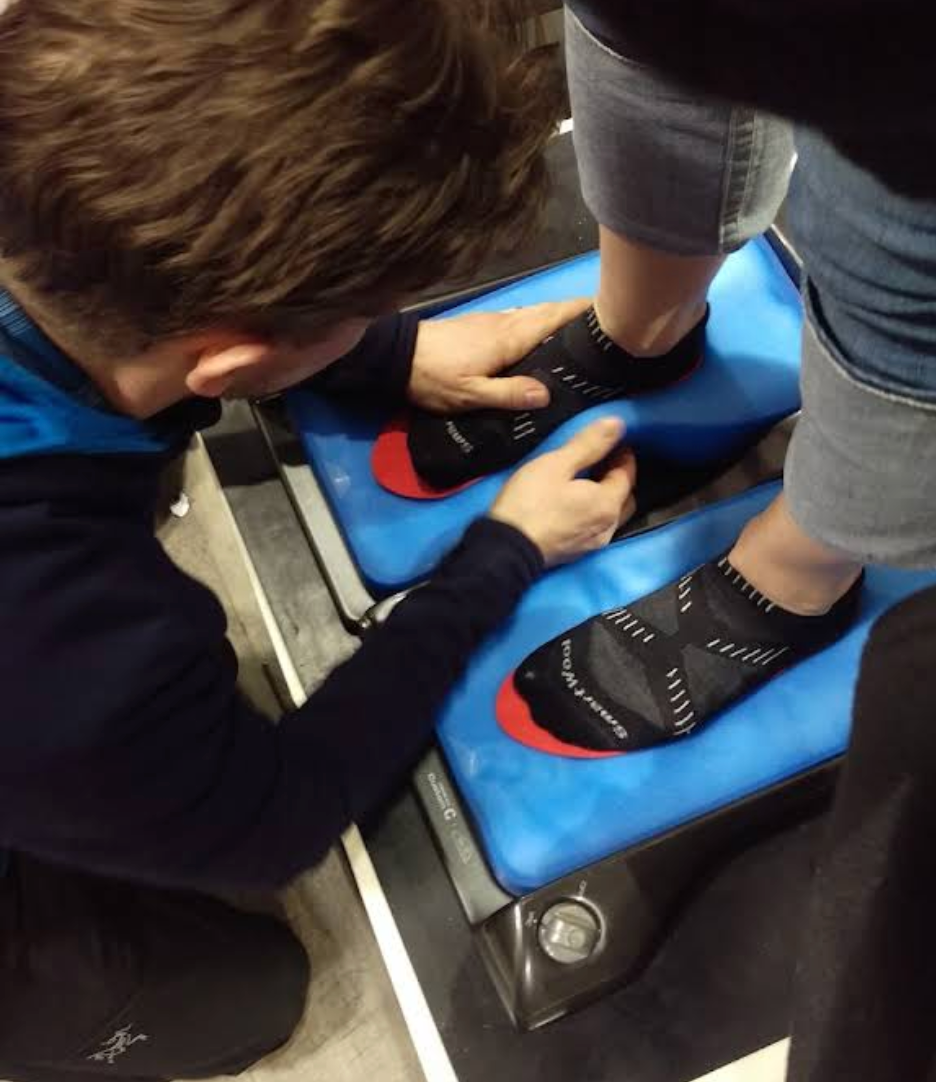
If you're coming in for a professional ski boot fitting, the sock you wear to your appointment matters. We ask all of our customers to bring the ski socks they plan to ski in, because the fitting is calibrated around that sock. Arriving in thick everyday socks and then skiing in thin technical socks will mean the boot feels different on the mountain than it did in the shop, and not in a good way.
If you don't already own a quality pair of ski socks before your fitting, don't worry. We stock a range of technical ski socks at Outside Sports and will help you find the right pair as part of the fitting process. Getting the sock right before we fit the boot means every subsequent step of the fitting, from custom footbed moulding to liner heat moulding, is calibrated correctly from the start.
Sold out
Sold out
Sold out
Sold out
Sold out
Sold out
Sold out
Sold out
Sold out
Sold out
One Sock Per Boot, Every Time
This sounds obvious, but it's worth saying: always wear one ski sock per foot, with no layering. Wearing two socks at once, even thin ones, creates friction between the layers, increases bulk, and throws off your boot fit. If your feet are cold in a single technical ski sock, the solution is a better fitting boot or boot warmers, not a second sock.
How Often Should You Replace Your Ski Socks
Like any technical performance garment, ski socks wear out. The fibres that provide elasticity, cushioning, and moisture management degrade over time, and a worn-out ski sock provides a fraction of the performance of a new one. If your ski socks are pilling, losing their shape, sliding down inside your boot, or no longer sitting smoothly against the skin, it's time to replace them. A good rule of thumb is to assess your ski socks at the start of each season and replace any pairs that are showing significant wear.
The Right Ski Sock for Kids
Children's ski socks follow exactly the same principles as adult ski socks. Thin, technical, merino-blend, over-the-calf, and seamless at the toe. Kids are often more susceptible to cold feet than adults because they tend to stand around more and generate less body heat through activity. Getting the right ski sock for your child is just as important as getting it right for yourself, and it's something we can help with when you bring them in for a children's ski boot fitting at Outside Sports.
Our Recommendation
At Outside Sports, we stock a carefully selected range of technical ski socks from leading brands chosen for their performance, durability, and fit. We recommend trying your ski socks on in store before your boot fitting appointment, or arriving with a pair you already trust. If you're unsure what to look for, ask us. Sock selection is part of our boot fitting process, and we're happy to guide you through it.
The Bottom Line on Ski Socks
A quality pair of technical ski socks won't fix a badly fitted boot, but a bad pair of socks can absolutely ruin a well-fitted one. Thin, technical, moisture-wicking, and over-the-calf is the formula. Everything else, thickness, cotton, layering, and novelty Christmas socks, works against you on the mountain.
If you're investing in a professional ski boot fitting this season, invest in the right ski socks to go with it. It's a small decision that makes a surprisingly big difference to your comfort, warmth, and performance on the snow.
Come and see us at Outside Sports. We'll make sure everything from your socks to your boots is working together to give you the best possible day on the mountain.