
We had an awesome ski season in New Zealand so if you want to keep the music playing you might be thinking about heading up to Japan for a week or two or three over the Southern Hemisphere summer. At Outside Sports we are regular visitors to ski and snowboard in Japan, and our team members Tsukasa and Kazu are Japanese, and grew up skiing there. Now we’ve pooled our wealth of expert local knowledge into a reference guide that covers all you need to pack for a great trip to the land of Japow.
Your Local Japan Ski Gear Checklist And Travel Tips
What Ski Gear To Bring to Japan
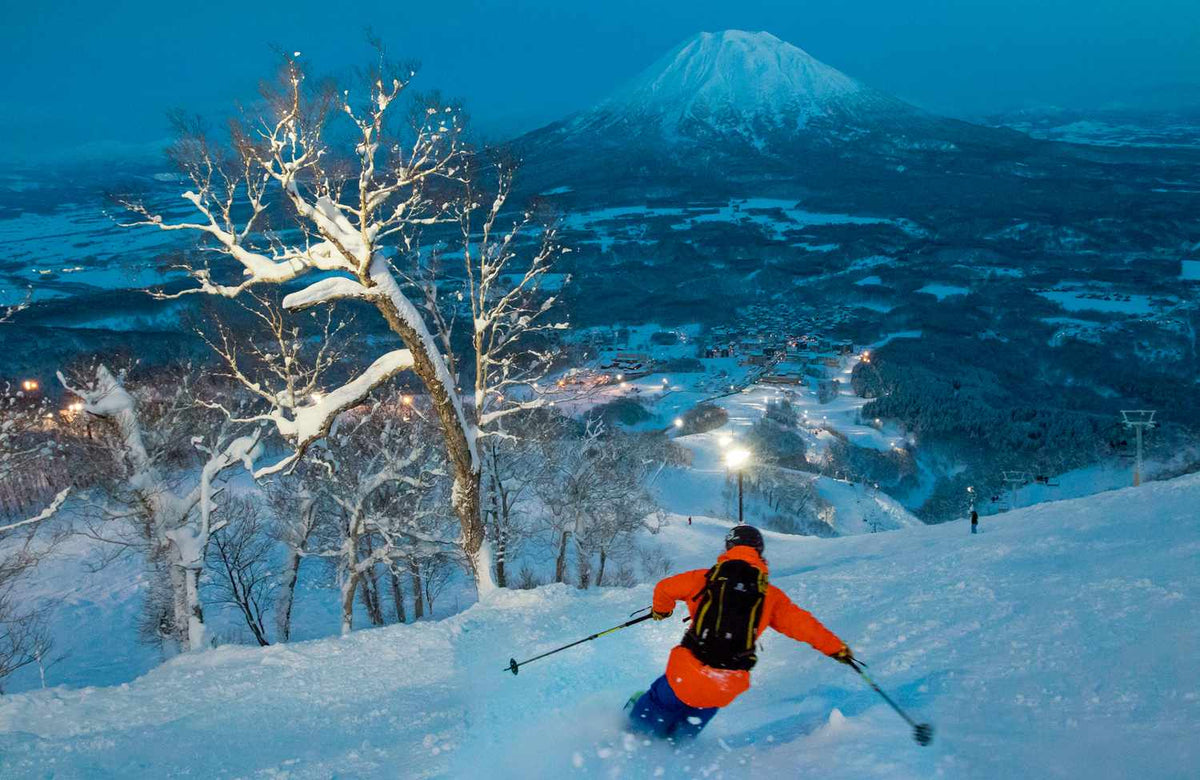
Japan is famous for its light, dry powder, but it also has some incredible skiing on trail too, and many people are happy to stick to that and still have the best skiing of their lives.
You can rent gear when you get there, but if you want to take your own skis this is what we recommend:
-
80–95 mm all-mountain skis for groomed runs, firm snow and occasional forays into shallow powder.
-
95–105 mm freeride skis suitable for a mixture of groomers and moderately deep powder – say up to your lower boot buckles
-
105–110 mm powder skis for classicJapanese powder skiing
-
110 + mm dedicated deep-powder skis fordeep blower pow
Local Tip: If you're aiming to spend most of your time in powder, a freeride ski between 108–115 mm underfoot is apretty safe choice for the conditions you’re likely to encounter much of the time. No matter what the old timers might say, wider skis are more fun in pow. They give better flotation, particularly in deep snow and help you keep up your speed in the low-angle terrain you’ll find in most Japanese resorts.
Side and Backcountry Powder Skiing Safety Gear
If you’re planning to explore ungroomed terrain in the sidecountry or backcountry, you’ll need proper avi safety gear. You should also never, never, ever ski in the side or back country alone. People die every year in Japan from deep snow immersion, because there was no one around to dig them out.
Safety equipment checklist:
-
20 – 30 litre backpack for spare clothes and safety gear
-
Water and energy snacks
-
Emergency insulation bag (not a foil blanket)
-
Fully charged phone
-
Offline resort map
-
Whistle
-
Emergency contact information
-
Avi skills training and a skiing partner for avalanche terrain
Local Tip: Keep in mind that lift-accessed terrain isn't automatically safe. Skiing through resort gates or into uncontrolled sidecountry may require avalanche equipment, appropriate training and a partner. Check the resort rules and current conditions before you head out.
Ski Gear Luggage
You’ll need a ski bag to transport your skis. A sling bag is ok for a single pair of skis and poles, but we suggest going for a wheeled bag, especially if you’re taking a couple of pairs of skis or travelling as a couple. You’ll also want a sturdy boot bag for your boots, helmet, goggles and gloves, and a duffle of around 60 to100 litres for everything else.
Ski and Board Packing Checklist
-
Skis and/or snowboards
-
Ski poles with powder baskets
-
Goggles with a low-light lens
-
Spare goggles or interchangeable lens
-
Gloves and/or mittens (mittens generally feel warmer)
Local Tip: If you're bringing your own boots and aren’t keen on the extra hassle of lugging a ski bag around the placehiring skis in Japan is a goodoption. You can choose the right width for the conditions and travel lighter, which is very handy if you plan on taking the train.
How Cold Does Japan Get?
Japan’s famous light, powdery snow is made by very cold air blasting in from Arctic Siberia across the Sea of Japan. That means it’s usually a lot colder than an average day at a New Zealand ski field. Having said that Japan's winter temperatures vary quite a lot, depending on the resort, their altitude and the current weather conditions.
Typical midwinter daytime temperatures:
Hokkaido: Niseko / Kiroro: -5°C to -12°C, Furano -8°C to -15°C
Honshu: Hakuba -3°C to -10°C, Shiga Kogen -7°C to -15°C
The challenge is to stay warm and dry throughouta whole day of tumbling in the snow – and that’s the job of the world’s finest snow and mountain adventure apparel at Outside Sports stores.
Clothing – The Importance OfLayering
The secret to staying comfortable in Japan is having layers that can be adjusted as the conditions change.
The Base Layer is forMoisture Management
Wear merino wool or technical synthetic thermals against your skin to help move moisture away from your body and reduce the chilling effect of perspiration.Stay well away from cotton, because it retains moisture and gets cold. Mons Royale, Icebreaker, and Le Bent all make great merino baselayers.
The Mid layer is for Insulation
A fleece, lightweight synthetic jacket or down layer provides warmth. Synthetic insulation is good in damp conditions and down provides lots of warmth for its weight.On very cold days, you may want to have two insulating layers under your waterproof shell jacket. As well as the brands mentioned above ,The North Face, Arc’teryx, Picture, and Patagonia all have ideal Japow trip midlayers in their range
The Outer layer is for Weather Protection
Gore-Tex (or a similar fabric)is the go-to for Japan because it’swaterproof and windproof and can breathable membrane to stop moisture building up from the inside. You’ll also appreciate sealed seams and waterproof zips, a high storm collar, a helmet compatible hood, and either a powder skirt that connects your jacket to your pants to keep snow out, or what we all wear - bib pants.
You’ll find these features in the world finest snow outer wearbrands at Outside Sports. Choose from Picture Organic Clothing, Patagonia, The North Face, Scott, Flylow, Helly Hansen, and Arc’teryx
Clothing Packing Checklist for a Ten Day Japow Trip
-
2–3 thermal base-layer tops
-
2 pairs of thermal leggings
-
1–2 fleece or insulating mid layers
-
1 lightweight insulated jacket
-
1 waterproof/breathable ski jacket
-
1 pair of waterproof ski pants or bibs
-
3–4 pairs of merino ski socks
-
Warm beanie
-
Comfortable après-ski clothing
-
Underwear and sleepwear
Local Tip: Ski with a backpack so you can swap out your midlayers to keep at a comfortable temperature throughout the day. 20 to 30 litres is about the right size.
Gloves And Keeping Your Hands Toasty
It's worth bringing more than one pair of ski gloves to Japan, because cold, wet hands are no fun. Don't bring gloves that are too tight. Restricted circulation makes your hands colder.
Gloves Packing List
Insulated waterproof gloves
Warm mittensfor extremely cold days. Mittens are generally warmer than gloves because your fingers share their warmth with each other.
Thin liner gloves are handy for boosting the warmth factor, and handy for using your phones, cameras or skigear without exposing your bare skin.
Spare gloves
Hand warmer sachets are a life saver if you really don’t like cold hands
Footwear – Keep Out The Snow, Be Careful of The Ice
One of the very bestthings you can pack for Japan is a pair of anti-slip Black Peak ice grips for your shoes. Footpaths around ski resorts and in the ski towns can be crazy slippery. Even a short walk from your hotel to a restaurant can be treacherous. Also its a good idea to pack waterproof winter boots with good insulation and a grippy sole. Ordinary trainers can get very soggy and cold on snowy Japanese streets.
Footwear Packing Checklist
Waterproof insulated winter boots
Removable anti-slip ice grips
Comfortable indoor shoes or slippers
Warm socks for evenings
Technology and Travel Essentials Checklist
Passport and travel insurance details
Phone and charging cable
Pocket wi-fi rental or travel esim
Portable power bank
Japan-compatible plug adaptor (type A)
Offline maps and translation app
Credit/debit cards and Japanese yen
Lift tickets or booking confirmations
Sunscreen and SPF lip balm
Personal medication and basic first-aid kit
Hand warmers
Small backpack for ski days
Reusable water bottle for your backback
Locals Super Hack! Hire a Pocket Wi-Fi Unit
Reliable internet access makes travelling in Japan much easier, particularly when navigating unfamiliar towns, checking ski bus schedules, using Google maps and translating menus. A pocket wi-fi unit is a small portable router that provides internet access for several devices. You can order one online and collect it at the airport or arrange delivery to your hotel. For two or more travellers sharing internet access, having a pocket wi-fi with you can be a game-changer. For a solo traveller, an eSim may be cheaper and easier, provided your phone supports it. Remember pocket wi-fi units need charging and rentals must be returned before you leave Japan.
Use the‘Black Cat’ Luggage Forwarding Service
One of Japan's most convenient travel services is Yamato Transport, commonly called black cat because of its logo.Its TA-Q-BIN service lets you to forward suitcases, ski bags and other luggage between participating airports, hotels and ski destinations. So instead of struggling with skis and heavy bags on trains, buses and through busy stations, you can send them ahead and travel with just a small overnight bag.
Ski equipment needs at least two days to get there or even three days for more remote destinations, like Tohoku. Confirm the cut-off and that your accommodation can receive the luggage. Ski equipment cannot be dispatched from convenience stores.
Black Cat is awesome if you're spending time sightseeing in Tokyo or Sapporo before travelling to your ski destination. Here the official Yamato website: https://www.Kuronekoyamato.Co.Jp/ytc/en/send/services/ski/
Local Tips For Luggage Forwarding
-
Book or arrange forwarding well before you need your gear.
-
Confirm that your hotel can accept deliveries.
-
Check delivery times carefully, especially for remote ski resorts.
-
Keep essential clothing, medication and valuables with you.
-
Allow additional time during busy holiday periods.
-
Check size and weight limits for ski bags.
Need Travel Luggage?
We have some really nice travel luggage and cabin bags from The North Face, Patagonia, Yeti, Blackbriar, and DB.
Bonus Local Tips for Skiing Powder in Japan
Bring your ski boots in your cabin baggage. Boots are difficult to replace at short notice, especially if you have custom-fitted liners or footbeds. Check cabin baggage weight and size restrictions.
Expect poor visibility. Heavy snowfall and flat light are common. A low-light goggle lens is a must.
Dry your equipment every night. Many Japanese ski hotels have drying rooms. Remove your boot liners if you can and make sure gloves and other clothing dry thoroughly.
Pack light. Japanese accommodation often has limited storage space, and carrying large suitcases through snowy streets can be awkward. Multiple thermal layers are more useful than several bulky jackets.
Check your airline's ski baggage policy. Some airlines include ski equipment within checked baggage allowances, while others have separate conditions. Check bag length, weight and connecting-flight restrictions before departure.
Don't rely entirely on electronic payments. Japan is increasingly cashless, but smaller restaurants, local buses, and some vending machines still require cash.
Enjoy the onsens. Natural hot spring baths are one of the great pleasures of visit to Japan. But you need to know onsen etiquette, including washing before entering and not wearing keeping swimwear at traditional communal baths. Some hotel might allow it, but the real local onsens don't, and for that reason are usually divided into separate male and female rooms.