Get $10 Voucher per $100 Spend! T&C Apply

Free Shipping on Orders Over $150. T&C Apply

Enjoy 60 Days of Easy, Hassle-Free Returns! T&C Apply

One of the most misunderstood specs in ski boot buying — and one that has a bigger impact on your skiing than most people realise.

Walk into any ski shop and you'll be faced with boots ranging from a flex rating of 60 all the way up to 140 or beyond. Most skiers either ignore this number entirely or assume that stiffer always means better. Neither approach serves you well. Choosing the wrong flex rating is one of the most common ski boot mistakes — and one that a professional boot fitter can help you get right.

Here's everything you need to know.

What Is Ski Boot Flex?

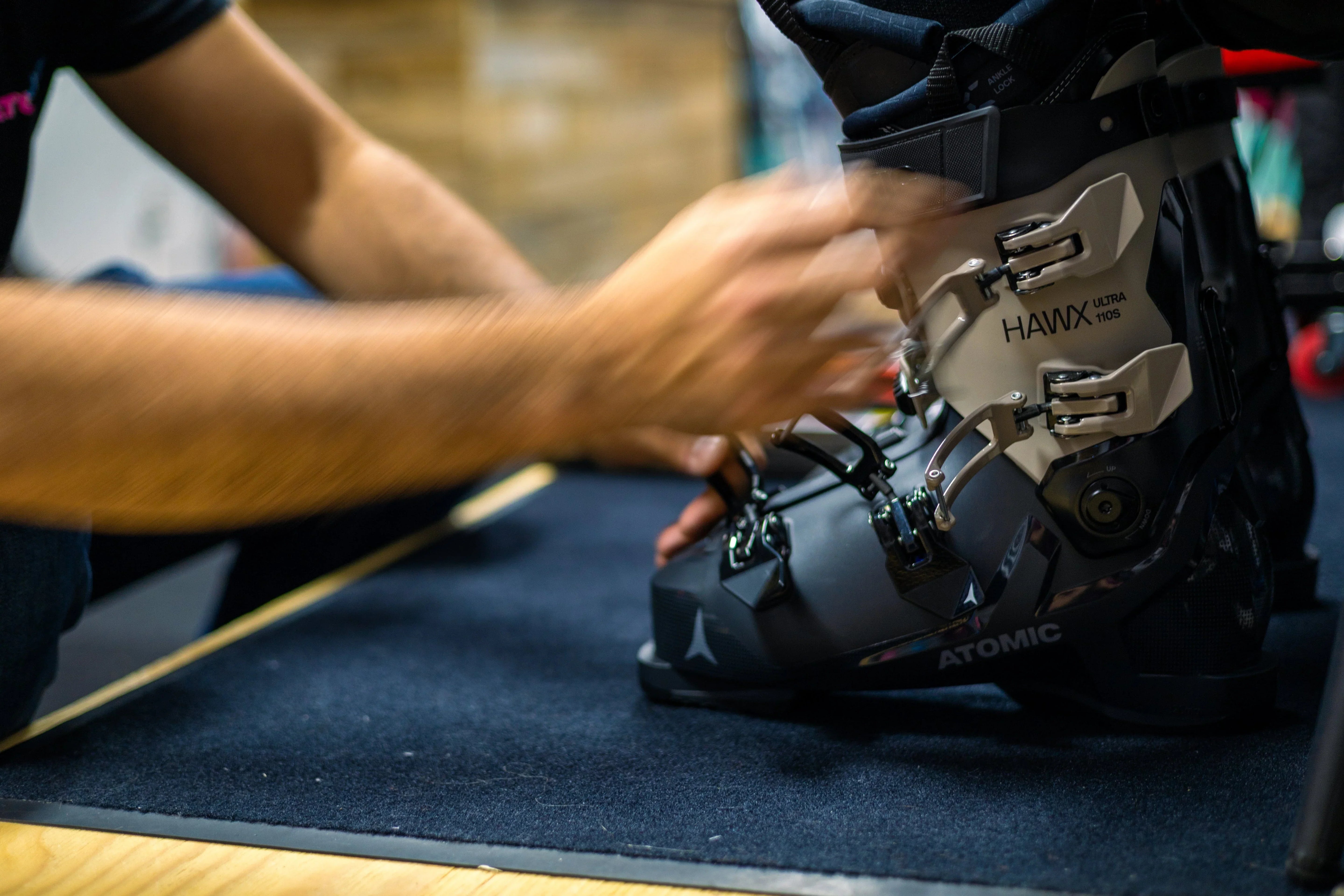
Ski boot flex refers to how much resistance a boot offers when you push your shin forward against the cuff. A boot with a low flex rating bends more easily. A boot with a high flex rating requires significantly more force to move.

This matters because flexing forward into your boots is fundamental to skiing. Every time you initiate a turn, absorb a bump, or drive into a carve, you're pressing against the front of your boot cuff. How much that cuff resists — and how much it gives — directly affects your balance, control, and ability to ski efficiently.

The flex rating is expressed as a number, typically ranging from around 50 at the softer end to 130+ at the stiffer end. These numbers aren't standardised across brands — a 100 flex from one manufacturer may feel noticeably different from a 100 flex from another, and even within the same brand, a 130 flex racing boot will perform very differently from a 130 flex touring boot. They give a useful general guide, but they should never be the only factor in your decision.


Why Flex Rating Matters So Much

Get the flex wrong and everything else suffers, regardless of how well the boot fits in other respects.

Too soft a flex for your ability and skiing style means the boot collapses too easily when you push against it. Instead of your energy being transmitted into the ski, it's absorbed by the boot. You'll struggle to hold an edge on firm snow, feel unstable at speed, and find it difficult to ski with any precision or power. Advanced skiers in soft boots often describe the feeling as "skiing in slippers."

Too stiff a flex and the opposite problem occurs. The boot doesn't give enough when you need it to, making it hard to flex into a balanced, athletic stance. Your weight ends up too far back, turn initiation becomes laboured, and your legs fatigue quickly from fighting against the boot rather than working with it. Beginners and lighter skiers in overly stiff boots often find skiing exhausting and technically frustrating for exactly this reason.

The right flex puts you in the sweet spot — a boot that supports and responds to your movements without working against them.

Ski Boot Flex Rating Guide

These are starting points, not rules. Several other factors shift the ideal flex significantly — and a professional boot fitter will consider all of them together.

Note: Women's boots typically range from 65–115 flex, while men's range from 70–140+. This isn't simply about ability — it reflects genuine physiological differences in weight distribution and leg strength, ensuring better fit, comfort, and performance for female skiers.

Flex Rating Skill Level Notes

50 - 70

Entry level

Soft, forgiving, easy to flex, ideal for first-time skiers or those returning after a long break.

80 - 100

Beginner / Intermediate

Balance of comfort and control, suitable for developing technique across a range of terrain.

110 - 130

Advanced

Responsive and performance-focused, offering better power transmission and edge hold at higher speeds.

130+

Expert/Race

Very stiff, precision-driven designed for aggressive skiers, racers, and those demanding maximum energy transfer.

Factors That Influence the Right Flex for You

Skiing ability

Ability level is the starting point for any flex conversation, but it's just one piece of the puzzle. A beginner needs a forgiving boot that allows easy movement while technique develops. An advanced skier needs enough stiffness to handle demanding terrain with precision. But ability alone doesn't determine the right flex — everything below matters just as much.

Body weight and strength

Heavier or more powerful skiers generally need a stiffer flex to get the same response from a boot. A 90kg skier in an 80 flex boot may find it collapses too easily under their weight, whereas a 60kg skier in the same boot may find it perfectly responsive. Physical fitness and leg strength matter too — a strong, athletic skier can work a stiffer boot more effectively than someone with less lower body strength.

Skiing style and discipline

Aggressive, fast skiers who spend time on hard groomers or steep terrain benefit from stiffer flex for better control and precision. Racers and hard-chargers particularly benefit from maximum stiffness to directly translate every movement into the ski. Park skiers and casual all-mountain riders, on the other hand, often prefer a more forgiving flex that allows for easier, more playful movement. Mogul skiers frequently favour a slightly softer flex to help absorb the constant impacts of bump skiing.

Temperature

This is one that catches many skiers off guard. Flex ratings are measured at room temperature — but most plastics react to cold, and ski boots are worn in cold environments. In very cold conditions, your boots can feel noticeably stiffer than they did in the shop. This is worth factoring in, particularly if you ski in consistently cold resorts or early morning conditions. It's also worth knowing that boots soften slightly as they warm up during the day.

Brand and model variation

Flex ratings are not standardised across the industry. A 100 flex from one brand may feel meaningfully different from a 100 flex from another, due to differences in shell material, construction, and cuff design. Even within the same brand, different product lines can feel very different at the same rated flex. This is one of the many reasons why trying boots on — and ideally working with a boot fitter — is so much more reliable than buying based on specs alone.

Gender-specific considerations

Women's ski boots are typically built on a different last and with a lower flex range than men's equivalents, reflecting differences in average weight, calf shape, and lower leg anatomy. Many women's boots also feature a higher cuff to better accommodate a wider calf. That said, some women prefer men's boots for a stiffer flex — something a boot fitter can advise on based on your specific build and skiing style.

Forward Lean — The Flex Factor Most Skiers Don't Know About

Closely related to flex is forward lean — the angle at which the boot cuff sits relative to the lower boot. More forward lean tips your body into a more aggressive, forward stance. Less forward lean gives a more upright, relaxed position.

Most ski boots allow you to adjust forward lean via a small lever or screw on the back of the cuff. Getting this right works in tandem with flex — a boot with the right stiffness but the wrong lean angle can still put you in a compromised position. Your boot fitter will assess your natural stance and skiing style to recommend the right forward lean setting for you.


How Manufacturers Control Boot Stiffness

Ever wondered what actually makes one boot stiffer than another? It's not just one thing — manufacturers use a combination of design and material choices to achieve a given flex rating:

Shell material and thickness — Stiffer boots are typically made from more rigid plastics such as polyurethane (PU) or polyether (PE), which resist flexing and transmit more power. Shell walls are made thicker in key areas, particularly around the spine and lower shell. Some alpine touring boots use nylon-based plastics such as Grilamid or Pebax to achieve rigidity with reduced weight.

Cuff design — A taller or more reinforced cuff increases leverage and stiffness. Many performance boots feature dual-injected cuffs, where firmer plastic is used at the back to resist forward flex, while softer material at the front allows for ease of entry and fore/aft movement.

Reinforcements — Some high-performance boots incorporate carbon fibre or metal inserts in the spine of the cuff or shell. These dramatically reduce flex and enhance torsional rigidity, making them popular with racers and aggressive skiers.

Power straps and Booster straps — The wide strap at the top of the cuff does more than just close the boot. A wider or elasticised power strap — such as a Booster Strap — adds rebound energy and tightens the upper boot wrap, effectively increasing flex resistance when skiing. Upgrading to a Booster Strap is one of the simplest ways to get more response from a boot.

Adjustable flex mechanisms — Some boots feature internal rivets, screws, or braces that can be repositioned to fine-tune stiffness. This allows skiers to adjust their flex slightly as conditions or preferences change.

Liner stiffness — Higher flex boots typically feature stiffer liner materials to complement the shell and aid energy transmission. Some liners also incorporate laces or internal power straps to enhance fit and performance further.


Sold out


Sold out


Sold out


Sold out


Sold out


Sold out


Sold out


Sold out


Sold out


Sold out

How Boot Flex Changes Over Time

Ski boot flex isn't fixed forever. Plastic ski boot shells fatigue and soften over time, particularly with frequent use and exposure to cold temperatures. A boot that started life as a firm 110 flex may ski significantly softer after several seasons of hard use.

This is one of the reasons why skiing in old boots — even boots that once fitted and performed well — can quietly undermine your skiing without you realising it. If your boots are more than five seasons old and things have started to feel less precise or responsive, flex fatigue may be part of the reason.

Why You Shouldn't Just Pick the Stiffest Boot You Can Find

There's a common assumption among skiers — particularly improving skiers who want to progress — that stiffer is always better. It isn't. A boot that exceeds your strength, weight, and ability level will work against you, not for you. It takes significantly more force to flex properly, which means your weight ends up too far back, your turns become defensive rather than dynamic, and you fatigue faster.

The goal is to find the flex that matches where you are right now — with room to move up as your skiing develops. A professional boot fitter will be honest with you about this rather than simply pointing you towards the stiffest, most expensive option on the shelf.

How a Professional Boot Fitter Gets Flex Right

Choosing flex isn't something you can reliably do from a spec sheet or a size chart. It requires an assessment of your whole skiing picture — ability, weight, build, style, goals, and the specific feel of different boots on your foot.

Our boot fitting specialists take all of this into account. Using the Sidas FEETBOX® EVO scanning system alongside a thorough in-person assessment, we evaluate not just your foot shape but your stance, alignment, and biomechanics — all of which influence how a given flex will feel and perform for you specifically.

We also consider how flex interacts with the other elements of your boot fit. A heat moulded liner, Sidas custom insoles, and correctly set forward lean all affect how a boot feels and performs — sometimes making a given flex rating feel noticeably different from how it felt straight out of the box.

The result is a boot that doesn't just fit your foot — it fits your skiing.

The Bottom Line on Ski Boot Flex

Flex rating is one of the most important specs on any ski boot, and one of the most commonly misjudged. Too soft and you lose power, precision, and control. Too stiff and you'll fight your boots all day. The right flex — matched to your ability, weight, build, and skiing style — makes everything easier, more efficient, and more enjoyable.

If you're not sure whether your current boots are the right flex for you, or you're in the market for new boots and want to get it right first time, come and see our expert boot fitters in store. We'll assess your skiing profile in full and make sure your next boot is the right flex — as well as the right fit — for you.

Prepare For Your Next Adventure


HIKING


RUNNING


BIKING


SKIING

Leave a comment

Please note: comments must be approved before they are published.