


The last day of the season is easy to romanticise, but what happens after you get home matters more than most people realise. NZ summers are long, and gear that goes into storage without proper preparation can come out the other side with rusted edges, dried-out bases, and degraded bindings. A bit of attention at the end of October saves you time and money when June rolls around again.

End-of-Season Ski Storage in NZ: How to Protect Your Skis and Snowboard Over Summer
Start With a Full Service
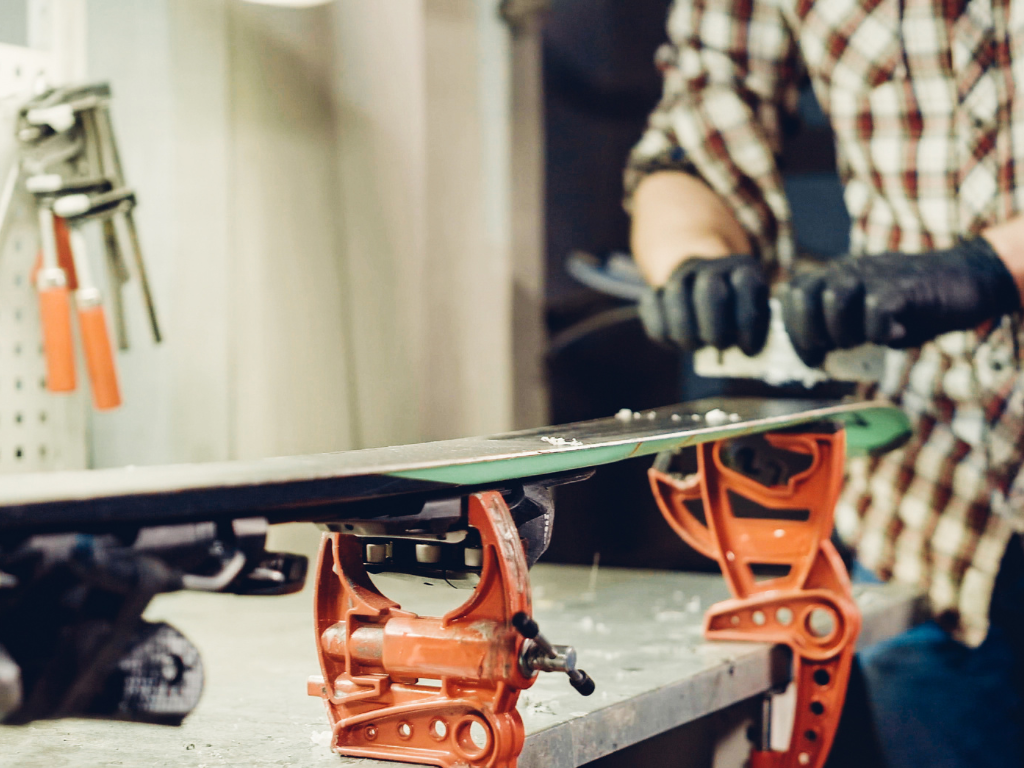
The single most important thing you can do before storing your skis or snowboard is get a full end-of-season service. This means a base grind to remove any gouges or scratches from the season, an edge tune to remove burrs and rust, and a thick coat of storage wax left on the base.
That last point is critical. Storage wax is applied thickly and left on without scraping. It acts as a barrier between the base material and the air, preventing the base from drying out over winter. It's a separate service you can request specifically when you book your gear in with our workshop in Queenstown or Wānaka. When you're ready to ski again next season, scrape and brush it off and you're good to go.
If you're not sure what condition your gear is in before it goes into storage, our guide to signs your skis or snowboard need a tune will help you assess it, and our breakdown of ski tune vs wax vs full service explains what each type of service actually involves.
Deal With Rust Before It Gets Worse
After a NZ season, especially one that ran into wet spring conditions, edges often carry some surface rust. Left untreated over summer, light rust becomes heavy rust, and heavy rust pits the edge surface in ways that can't be fully reversed.
Before storing, run a gummy stone or fine diamond stone along the edges to remove any surface rust. Follow up with a light application of a rust inhibitor or an extra pass of wax over the edges themselves. If the rust is already significant, a workshop can address it properly as part of an end-of-season service.
Clean Your Gear First
Before anything goes into storage, give everything a wipe down. Bases and edges accumulate grime, sunscreen residue, and salt from snow over the course of a season. A clean base takes storage wax better, and clean edges are easier to inspect for rust and burrs.
For boots, remove the liners and let them dry out fully before storing them separately. Moisture trapped inside a boot over summer encourages mould and accelerates liner breakdown. Loosen all buckles before storing to take tension off the buckle mechanisms over the long term.
Bindings should be wiped down and inspected. Check that all screws are tight and that there's no visible cracking or damage to the plastic components. If anything looks worn or damaged, get it looked at before next season rather than leaving it as a problem to solve on opening weekend. Our deep dive into ski bindings covers what to look for and how bindings work if you want to understand the specifics.
Where to Store Your Gear
Temperature stability and low humidity are the two things that matter most for ski and snowboard storage. A cool, dry space with consistent temperatures is ideal. What to avoid:
Garages with large temperature swings: repeated heating and cooling cycles stress the materials in skis and boards, particularly the glue layers between the core and base. In NZ, an uninsulated garage can get surprisingly hot over summer and creates poor conditions for gear storage.
Damp spaces: humidity accelerates rust on edges and can affect the integrity of boot liners and binding components over time.
Direct sunlight: UV exposure degrades boot plastics and binding materials faster than most people expect. Even indirect light over several months adds up.
A wardrobe, spare room, or insulated storage space is far better than a garage or shed for most NZ homes. If you're storing gear in a ski bag, make sure it's fully dry before zipping it up.
Snowboard-Specific Considerations
Snowboards are generally more straightforward to store than skis, but base flatness is worth thinking about. Storing a snowboard under heavy objects or in a position where it's under lateral pressure can affect base flatness over time. Store it upright or flat on a rack, not wedged in a corner under other gear.
If your board has a camber profile, some riders prefer to slightly detune the edges before storage to prevent catching on the first run back. This is a personal preference rather than a requirement, but worth knowing if you're particular about how your board rides coming out of storage.
Skis: A Few Extras to Know
Store skis with the brakes up, held together with a rubber ski brake retainer or ski tie. This keeps the brakes from being compressed against each other over months in storage, which can affect their spring tension over time.
If your skis have a significant rocker profile, store them flat rather than upright to avoid any long-term stress on the tip and tail. Carving skis with traditional camber can be stored either way without issue.
Helmets and Goggles
These often get thrown in a bag and forgotten, but they deserve a bit of attention before storage too. Wipe the inside of your helmet with a damp cloth to remove sweat and salt buildup, and let it air out fully before storing. Keep it in a bag or box away from direct sunlight to protect the foam and shell.
For goggles, clean the lens with a soft cloth (never rough fabric, which scratches the coating), and store them in their case with the lens facing up. Remove any moisture from the foam seal before they go away for the season.
Getting Ready for Next Season
When June comes around, don't assume your gear is ready to go just because it went into storage in good condition. Scrape and brush the storage wax off the base, do a quick check of edges for any rust that developed despite your best efforts, and step into your bindings to confirm everything is still releasing and retaining correctly.
If you want to be confident everything is in good shape before your first day, an early-season service is worth booking before the rush. Our guide on how often to service your skis or snowboard in NZ conditions covers exactly what to expect at different points in the season, and our breakdown of ski servicing costs in Queenstown and Wanaka gives you an idea of what it will cost.
We stock a full range of wax and snow tools online and in store if you want to handle basic maintenance yourself.