


There are few things more frustrating on the mountain than feeling slow when everyone around you seems to be gliding effortlessly. The good news is that poor glide almost always comes down to one of a handful of fixable problems. Here's how to diagnose what's going on and what to do about it.
Why Are My Skis Not Gliding? Common Wax, Base and Edge Problems Explained
The Most Common Reason: You Need a Wax
Start with the simplest explanation. Wax wears off with use, and a dry base creates friction against the snow rather than gliding over it. If you haven't waxed in the last 3 to 5 days on snow, that's almost certainly a significant part of the problem.
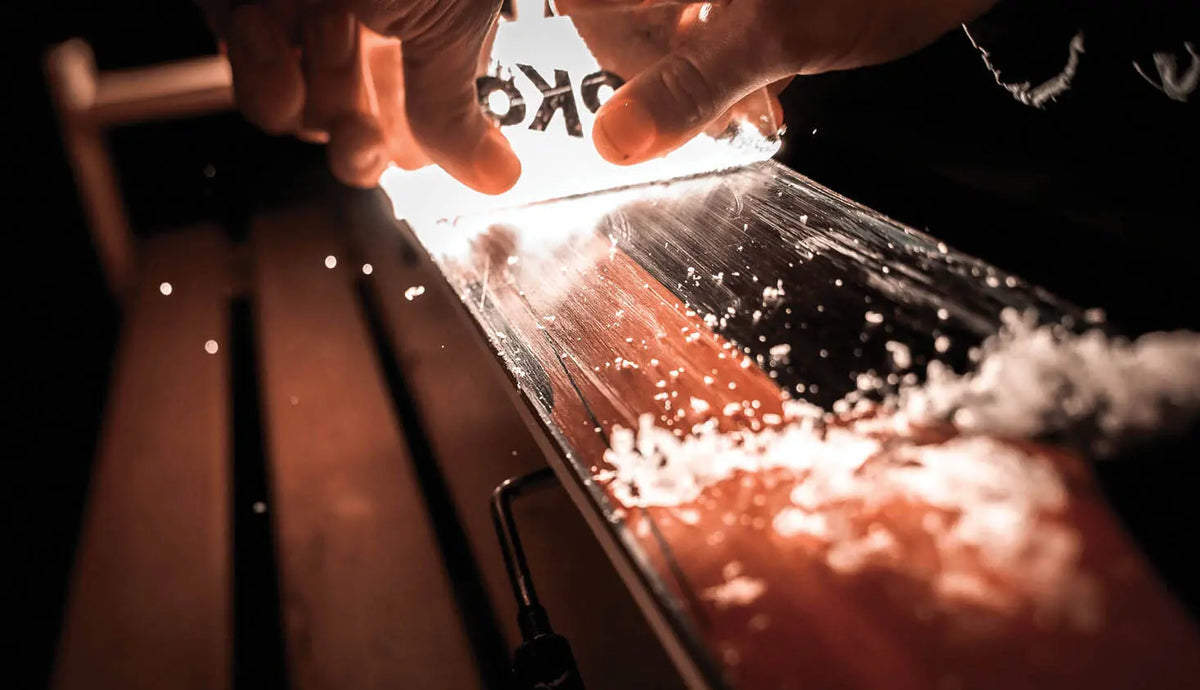
Look at your base under good light. A well-waxed base should look consistent in colour with a slight sheen. White or chalky patches, particularly towards the tip and tail where the base contacts snow first, are a clear sign the wax is gone. On a snowboard, check the flat sections of the base between the edges.
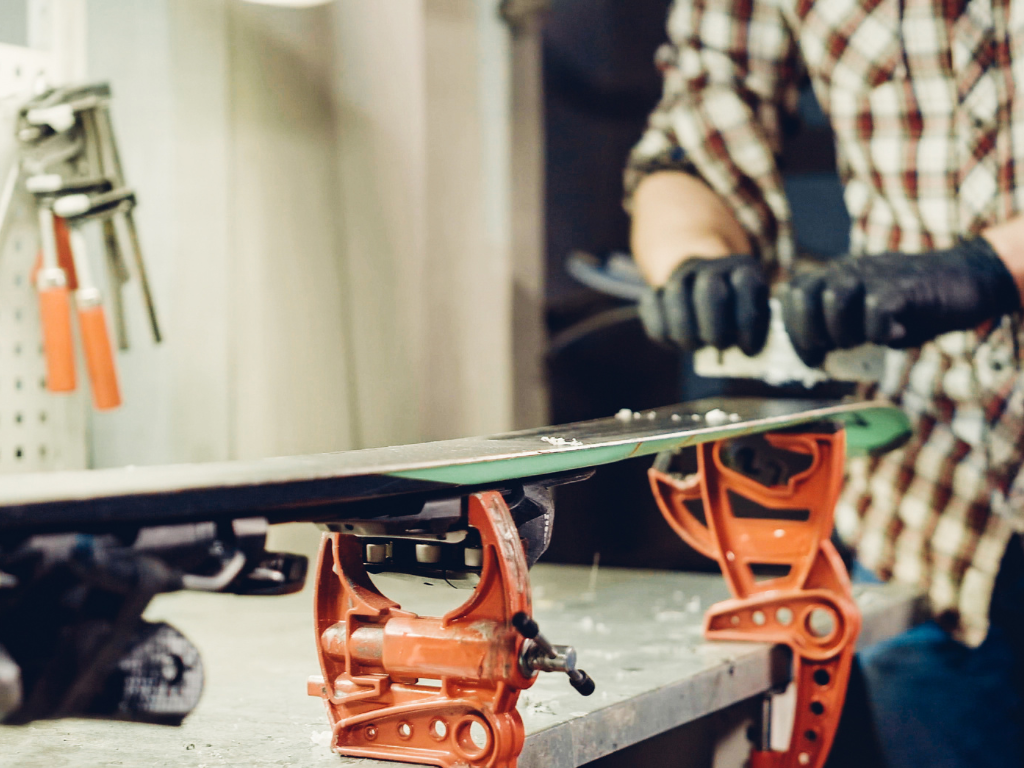
The fix is straightforward: a hot wax, either at home or at a workshop. If you want to handle it yourself, our VOLA tools guide covers the process in detail, and we stock a full range of wax and snow tools online and in store.
Wrong Wax for the Conditions
Not all wax is the same. Ski and snowboard waxes are formulated for different snow temperatures, and using the wrong one for the conditions can actually make glide worse rather than better.
Cold, dry snow requires a harder wax. Warm, wet spring snow requires a softer wax. Using a cold-temperature wax on warm spring snow, or vice versa, affects how the wax interacts with the snow crystals and can result in noticeably poor glide even on a freshly waxed base.
Most wax packaging indicates the recommended snow or air temperature range. If you're heading to a NZ resort in mid-winter and waxed with a warm-weather wax, or vice versa, it's worth re-waxing with the correct formulation before your next day out.
Base Damage: Gouges, Scratches and Dry Spots
A wax won't fix everything. If your base has deep gouges or significant scratches, the surface is no longer flat and smooth, which affects how evenly the ski or board contacts the snow. Wax also has nothing to bond to in a deep gouge, so those areas will always run dry.
Run your finger along the base slowly. Small surface scratches are normal and manageable with a good wax. Deeper gouges, ones you can feel clearly with your fingernail, need to be repaired with a P-tex candle or a professional base weld before waxing will make a meaningful difference.
In NZ conditions, base gouges are common. Early and late season thin cover means rock strikes happen, and a single run over a bare patch can leave marks significant enough to affect glide for the rest of the season if left untreated. Our guide on signs your skis or snowboard need a tune covers how to assess base damage and when to take it to a workshop.
A Base That Isn't Flat
This is one of the less obvious causes of poor glide and one that waxing alone can never fix. A ski or snowboard base should be perfectly flat across its width. Over time, through use and inconsistent servicing, the base can develop a convex shape (known as railed, where the edges are higher than the centre) or a concave shape (where the centre is higher than the edges).
A railed base reduces the amount of base material in contact with the snow, which directly affects glide. It also affects edge engagement and can make the ski or board feel unpredictable. A concave base creates a similar problem from the opposite direction.
Both require a stone grind to correct. This is a machine process done at a workshop and isn't something that can be addressed at home. If your glide hasn't improved after a fresh wax and there's no obvious base damage, base flatness is worth asking a technician to check. You can book your gear in with our workshop in Queenstown or Wānaka and we'll take a look.
Edges That Are Too Sharp or Wrongly Bevelled
Most discussions about edges focus on them being too dull, but edges that are too sharp or set to the wrong bevel angle can also affect glide, particularly on groomed runs where you want some forgiveness in the edge engagement.
Technically, the base edge bevel (the angle ground into the base side of the edge) affects how much the edge digs into the snow on a flat ski. A base edge bevel of zero degrees means the edge is flush with the base and will catch more readily. Most recreational skiers run 0.5 to 1 degree of base edge bevel, which allows the ski to sit flat on the snow without the edge grabbing. If your skis feel like they're catching and slowing you down on flat sections or slight undulations, the base edge bevel may be worth checking.
Side edge bevel affects how aggressively the edge bites when you tip the ski onto its edge. This doesn't directly affect glide on a flat base, but an overly aggressive side bevel can make the ski feel hooky and tiring to ski on groomed runs.
Snow Conditions You Can't Wax Around
Sometimes the issue isn't your gear at all. Heavily tracked, wet spring snow, particularly in the afternoon when NZ resort snow softens significantly, creates drag that no wax fully eliminates. Certain snow textures, particularly coarse machine-made snow early in the season, are also harder to glide on than natural mid-winter snow regardless of wax condition.
If you've ruled out all the gear-related causes and are still feeling slow, conditions may simply be the explanation. The best thing you can do in those cases is make sure your base is freshly waxed with the right temperature wax for the day, and accept that some days on NZ snow are just slower than others.
The Quickest Way to Diagnose the Problem
Work through this in order:
When did you last wax? If it's been more than 5 days on snow, start there. Look at the base: are there white patches, visible gouges, or does the surface look dull and dry? Run your fingernail across an edge: does it catch, or slide straight over? How does the ski or board feel on edge: hooky and grabby, or sliding out? Is the snow unusually soft, coarse, or heavily tracked?
Most glide problems are solved by the first two steps. If waxing and minor base repair don't fix it, it's time for a full service. Our guide to ski tune vs wax vs full service explains what each option involves, and our breakdown of how often to service your gear in NZ conditions will help you work out whether you're overdue.
For a full service or a workshop assessment, book your skis or snowboard in with us in Queenstown or Wānaka and we'll get you back on the snow gliding properly.